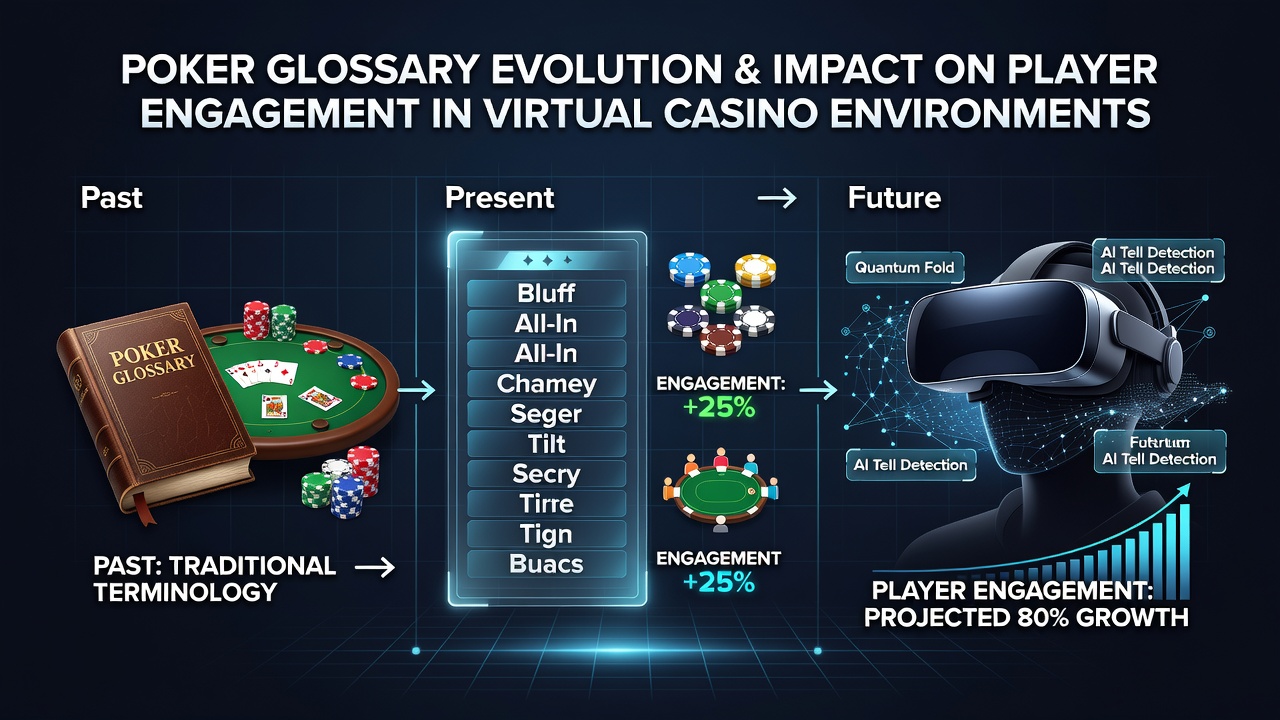
The Transformation of Poker Language and Its Consequences for User Involvement in Online Casinos
Observers note that poker terminology has expanded considerably since the shift toward virtual platforms began in earnest during the early 2000s, with new phrases and abbreviations emerging alongside technological features such as heads-up displays and automated tracking tools. Research indicates that these linguistic developments coincide with measurable increases in session lengths and repeat visits across multiple operator platforms.
Early online poker rooms relied on core terms like "bluff," "call," and "raise" that carried over directly from live tables, yet the addition of software-specific vocabulary introduced expressions such as "VPIP" for voluntary put money in pot and "PFR" for pre-flop raise. Data from industry reports shows that sites incorporating glossary pop-ups and in-game definitions experienced higher retention rates among new registrants compared to those without such aids.
Key Phases in Terminology Development
The first major wave of change arrived with the integration of real-time statistics overlays, prompting players to adopt shorthand like "HUD" and "AF" for aggression factor while forums and training sites standardized definitions that spread through community usage. Subsequent updates in platform design during 2018 through 2022 introduced terms tied to social features, including "emoji bet" and "chat fold," which allowed participants to signal intent without traditional verbal cues.
By October 2026, regulatory filings from the Nevada Gaming Control Board documented a further layer of evolution where operators embedded AI-driven suggestion engines that introduced context-specific phrases such as "auto-rebuy threshold" and "stack-to-pot ratio alerts." These additions aligned with observed upticks in daily active users on platforms that updated their help sections to match the new lexicon.
Connection Between Language and Participation Metrics
Studies from academic centers including the University of Nevada, Las Vegas found that players who mastered expanded glossaries demonstrated greater willingness to explore multi-table formats and tournament structures, which in turn correlated with elevated deposit volumes. The mechanism appears straightforward: clearer terminology reduces friction during decision-making, allowing participants to focus on strategy rather than deciphering interface elements.
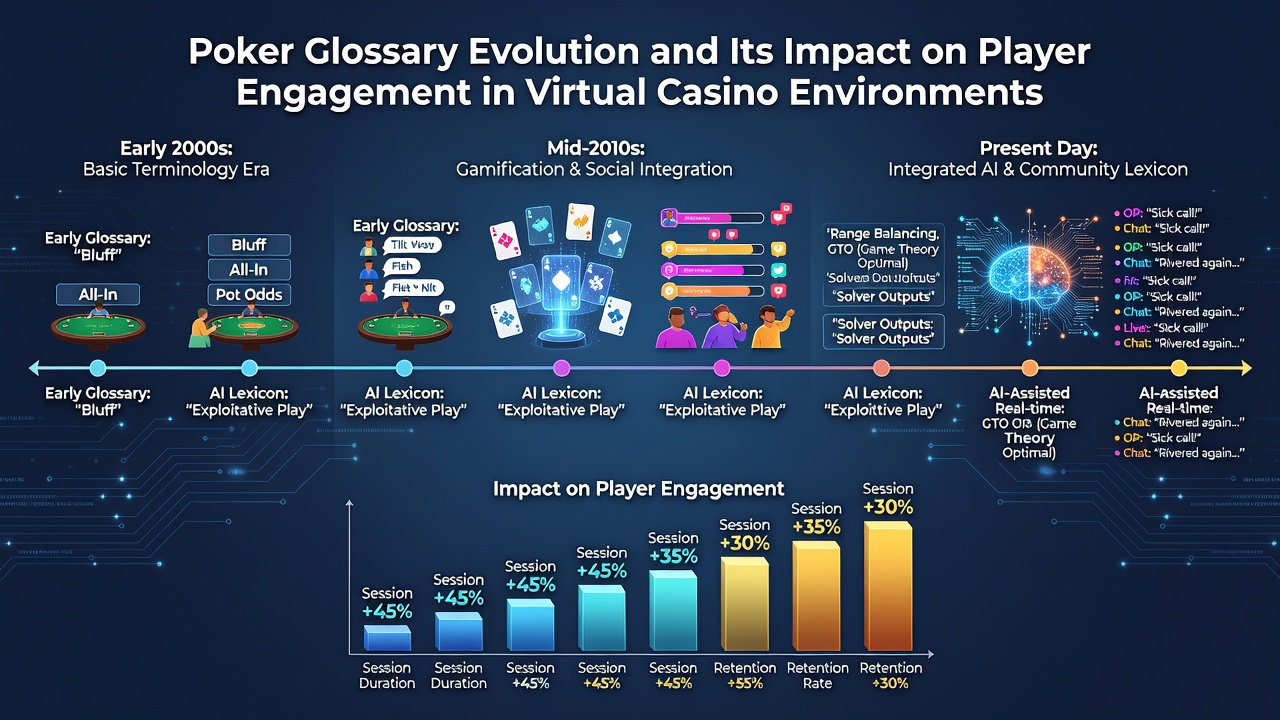
Community-driven resources have accelerated this process. Poker training networks and operator-maintained wikis now serve as primary repositories where definitions receive rapid updates whenever new mechanics appear, such as dynamic rake structures or cross-game leaderboards. Figures released by the European Gaming and Betting Association reveal that platforms linking directly to these resources report stronger engagement curves, particularly among users aged 25 to 34 who favor quick-reference materials over lengthy rule pages.
Regional Variations and Platform Adaptations
North American operators tend to emphasize statistical abbreviations within their tutorials, while Asian-facing sites incorporate localized slang translations that maintain core English terms for international tables. This bilingual approach supports cross-border participation without requiring full language overhauls. Observers note that consistent glossary standardization across regions has contributed to smoother migrations between desktop and mobile environments.
Virtual reality poker rooms represent the latest frontier, where spatial terms like "table orbit" and "gesture raise" are entering common usage as hardware capabilities expand. Early adoption data indicates that environments offering embedded terminology overlays achieve faster onboarding times for first-time visitors.
Conclusion
Terminology growth in poker continues to track closely with platform innovation, and available metrics suggest sustained influence on how participants interact with virtual casino features. Operators that maintain current, accessible definitions alongside gameplay tools position themselves to support longer and more frequent sessions across diverse user groups.